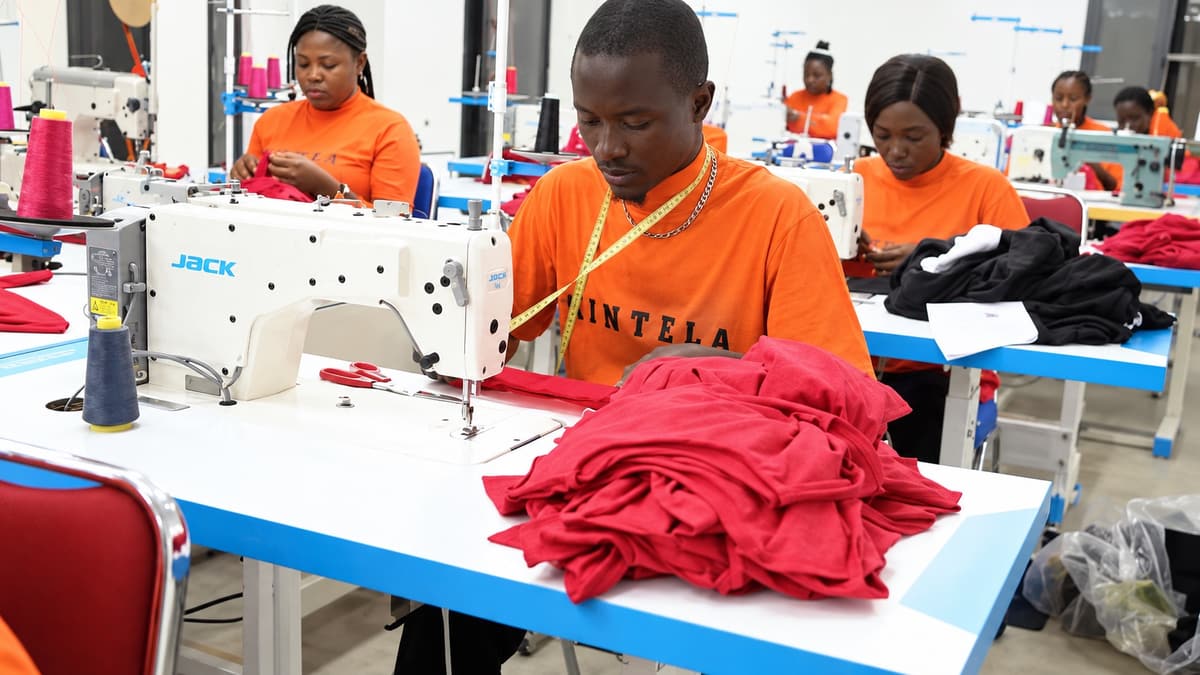
Plan uniforms for your organisation with Kintela, a garment manufacturer in Abuja, Nigeria. Share the roles, garments and quantities you need, and we’ll discuss the materials, fit and production requirements with you.
Start with what your team does during the day. The working environment, movement, care routine and required appearance all help shape the brief.
SCHOOLS & COLLEGES
Plan for the school day.
Share your existing uniform or proposed design, pupil age groups, size breakdown and term deadline. List everyday garments and sportswear separately so each requirement can be reviewed.
For office, customer-facing and field teams, identify the roles and garments required. Send your brand colours, logo placement, fit preferences and quantities per department.
Separate front-of-house, housekeeping, kitchen and service requirements. Include pockets, closures, movement needs and the intended laundering routine in your garment brief.
For security and operational teams, list garment styles, identification, pocket layout and working conditions. If protective performance is required, provide the exact specification for review before any suitability is confirmed.
For scrub or coat enquiries, share role colours, size allocation, pocket requirements and your facility’s garment and laundering specifications. Technical or protective requirements need separate review and confirmation.
Send the same specification and quantity breakdown to everyone quoting. Identify any required documents and approval stages so the scope can be reviewed before you commit.
A sample, drawing or reference photograph is a useful starting point. Add the practical requirements that may not be visible in the design.
Uniform buying checklist — details to send or agree for your order.
DETAIL
WHAT TO SEND OR AGREE
Garments & quantities
Styles, pieces per person and totals by role. Separate individual garments from complete sets.
Fabric & care
Required composition, weight, colour and laundering conditions. Materials and current availability are checked for the brief.
Sizes & fit
Measurements or an agreed size chart, plus a size breakdown for each style. Identify children’s and adult requirements separately.
Construction & function
Pockets, fastenings, sleeve length, movement needs and any technical specification. Confirm the proposed construction on a sample.
Branding & identification
Artwork, colours, dimensions and placement; names or department variations. Requested finishing methods are reviewed before confirmation.
Packing & delivery
Sorting by person, size or department; delivery locations, contact and required arrival date. Agree transport scope and charges.
Include your preferred fabric in the enquiry. Fabric composition, colour and performance are agreed for the specific order.
03 / APPROVE A CLEAR REFERENCE
Check the fit. Confirm the finish.
Discuss a sample before the full order, including its specification, cost and approval process. Review measurements, garment construction and logo placement with the person responsible for sign-off.
Keep a checked size list and one final artwork version. If several departments are involved, consolidate changes before approval so the quotation and production brief describe the same order.
Confirm the wearer allocationNames or roles, sizes and pieces per person.
Review the sampleFit, measurements, colour, construction and finishing.
Agree the commercial termsOrder scope, sample charges, payment and delivery arrangements.
Keep the approved referenceA clear specification for the order and future enquiries.
04 / THINK BEYOND THE FIRST ISSUE
A uniform brief you can return to.
Tell us about new starters, replacement garments and expected repeat orders. Discuss these needs early; future stock and production arrangements require confirmation.
01 / BRIEF
Share the requirements
Send the garments, wearer groups, quantities and intended use.
02 / REVIEW
Agree the scope
Discuss materials, samples, finishing and a written quotation.
03 / APPROVAL
Confirm the details
Approve the reference, size list and production schedule.
04 / HANDOVER
Plan the allocation
Agree packing, contacts and delivery arrangements before dispatch.
Minimum quantities depend on the garment, fabric, number of styles and finishing. Send the total pieces and a breakdown by size, colour and role. We will review the combination before confirming a practical order quantity. A department’s headcount is useful, but also specify how many garments each person needs.
How much do uniforms cost in Nigeria?+
A quotation depends on the garment construction, material, quantities, branding and packing. Share a sample or clear reference and identify any required fabric specification. Ask for sampling, decoration and delivery charges to be clear in the written offer so you can compare the same scope across suppliers.
Can we match our existing uniforms?+
Provide an existing garment, measurements, colour reference and any fabric or trim information you have. We can review the reference and discuss a proposed specification. Fabric shades, construction and fit need checking on the agreed sample; an exact match should not be assumed from a photograph alone.
Can we request embroidery or printed logos?+
Send the artwork, placement, dimensions and preferred finish with the brief. The team will review material compatibility and production arrangements before confirming a method and quotation. Include different department logos, names or badge positions separately so each variation can be assessed.
How should we plan replacement or repeat orders?+
Keep an approved garment reference, measurements, artwork and a record of the size mix. When enquiring again, confirm the quantity and required date. Material availability, colour matching, minimums and production timing need review for each repeat order; held stock or automatic replenishment is agreed separately if offered.
Can we visit the factory or review a sample?+
Factory visits are by appointment at 59 Mississippi Street, Maitama, Abuja, Monday to Friday, 09:30–17:00 WAT. Discuss the garment reference and sample requirements with the team first. Sample availability, fees, specifications and approval steps should be agreed before sample work begins.
LET’S DISCUSS YOUR UNIFORMS
Your people. Your next brief.
Share your garment reference, quantities, size mix and required date. We’ll work through the production requirements with you.